

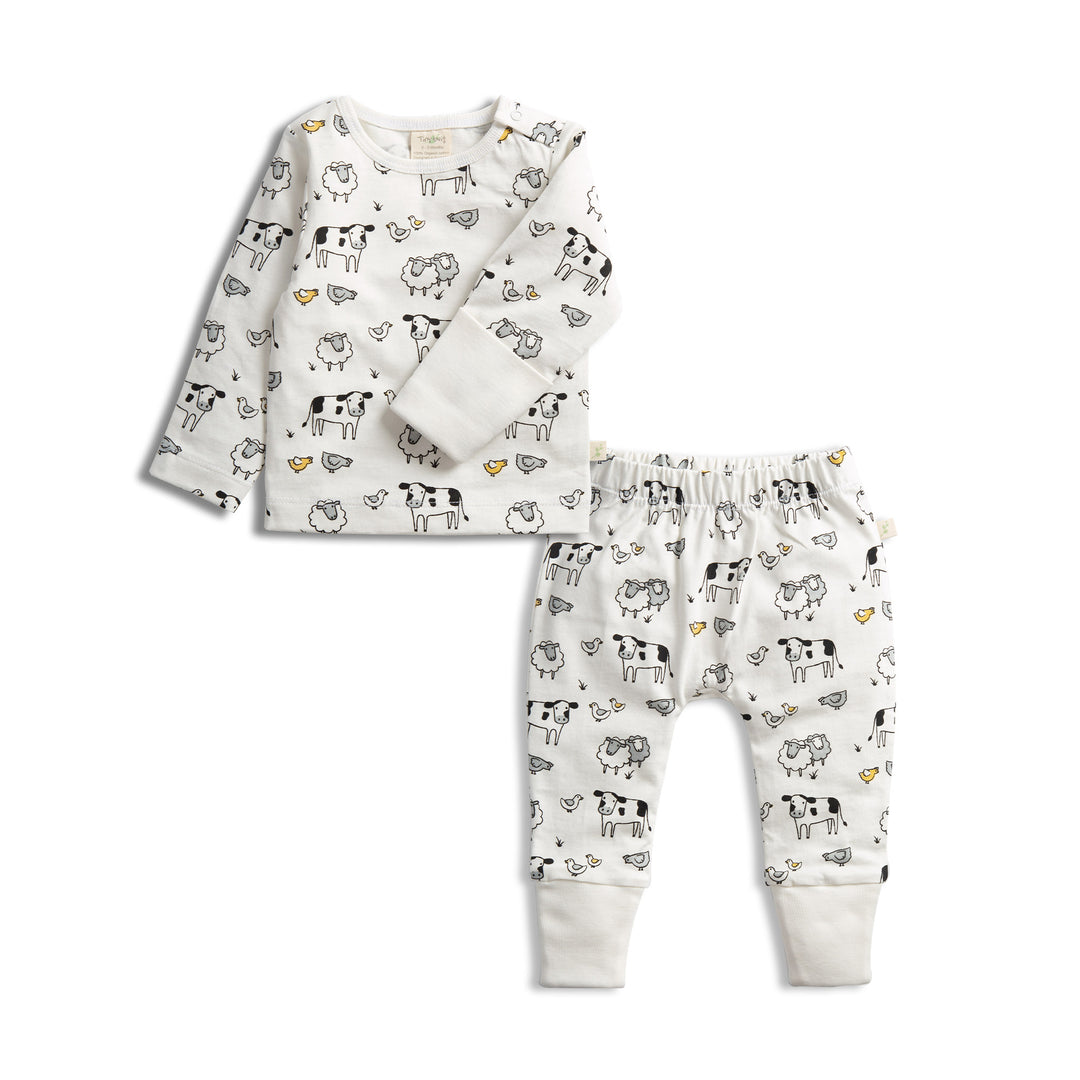



How to Know If Baby Clothes Are Truly Safe: The Certifications Might Not Mean What You Think
Every now and then, a trusted baby product makes headlines. Questions are asked. Claims are debated. Experts disagree.
For parents, the real question isn't who is right or wrong. It is simpler, and harder: how do I know a product is truly safe for my baby?
The label rarely answers it. “Organic”, “natural”, “gentle” and “baby-safe” are not regulated terms. Any brand can print them on a tag. What can be checked are certifications, test reports and inspection standards. This is what each one actually verifies, what it does not, and the questions worth asking any brand before you buy.
Why “organic” on a label isn't enough
“Organic” describes how the cotton was grown. It says nothing about what happened to it afterwards: the dyes, the finishes, the trims, the factory.
Cotton can be grown organically and then dyed with azo compounds, treated with a formaldehyde-based softener, or finished with fasteners that were never tested. That gap between the fibre in the field and the garment in your hands is where most of the real risk sits.
It is also why certification matters: a proper certification follows the garment through the whole chain, not just the first step. We wrote about one such case: the research on azo dyes and DNA damage.
What does GOTS certified actually mean?
GOTS, the Global Organic Textile Standard, is an independent certification covering the entire processing chain: fibre, spinning, knitting, dyeing, finishing and manufacturing.
There are two label grades:
- “Organic”: at least 95% certified organic fibre.
- “Made with organic materials”: at least 70%.
GOTS also restricts chemical inputs such as banned azo dyes, formaldehyde and chlorine bleach, and sets social criteria for the people making the garment. Certification is issued by an accredited third-party body and re-audited every year. It is not self-declared.
How to check it yourself: ask any brand for two things: the licence number and the name of the certifying body. Then look them up on the GOTS public database. A brand that cannot give you both has told you something useful.
What is CPSIA testing, and why does it matter in India?
CPSIA is the US Consumer Product Safety Improvement Act, the standard governing children's products sold in the United States. It sets limits on lead and phthalates and requires testing for mechanical hazards such as small parts and sharp points.
It has no legal force in India. That is precisely why it is a useful signal: an Indian brand testing to CPSIA is choosing a stricter bar than the one it is required to meet.
What does AQL inspection actually check?
Certification covers the system. Inspection covers the batch that is about to be packed.
AQL, or Acceptable Quality Limit, is a quality check done on every batch before it ships. A sample of garments is inspected, and if too many have defects, the whole batch is held back. The stricter the AQL level, the less is allowed to slip through. Ask a brand what AQL level they check to, and whether it happens before or after packing.
The parts parents overlook: zips, trims and needles
Fabric gets the attention. The hardware is where avoidable risk usually hides.
- Fasteners and trims. These need testing in their own right. Fabric certification does not cover them.
- Zips. A zip that sits against skin needs a guard, and a zip that fails is a small-parts hazard.
- Needle detection. A broken sewing needle is the risk almost no one thinks about. Responsible units scan every garment before packing.
Five questions worth asking any baby clothing brand
- What is your GOTS licence number, and who certified you?
- Which chemical standards do you test to, and can I see a report?
- Are your trims and fasteners tested, or only the fabric?
- What inspection standard do you use before a batch ships?
- Do you own your manufacturing, or is it outsourced?
Asking these shouldn't be seen as scepticism. It should be seen as love. The brands that welcome the questions are the brands worth trusting.
How Tiny Twig answers them
We have never believed a single certification is enough. Using GOTS-certified organic cotton is where our responsibility begins, not where it ends.
- GOTS organic cotton: certified through the full processing chain, not just the fibre.
- CPSIA testing: chemicals including lead, nickel and phthalates, plus small parts and sharp points.
- YKK components: premium zips, trusted worldwide for reliability.
- AQL 1.5 inspection: every production batch inspected before it leaves our unit.
- Needle detection: every garment scanned before packing.
- Considered design: a concealed two-way diagonal zip, designed in-house, with a protective guard, fold-over mittens and foot covers. Lifetime guarantee on the zip.
- Our own manufacturing: vertically integrated, our own fabric and our own unit. Not outsourced.
Frequently asked questions
Is organic cotton actually safer for a newborn's skin?
The benefit is less about the fibre and more about what is kept out of it. Certified organic processing restricts the dyes, bleaches and finishes most likely to irritate newborn skin.
How do I verify a GOTS certificate?
Ask the brand for its licence number and certifying body, then search the GOTS public database. Certification is annual, so check that the date is current.
Are “azo-free” and “GOTS certified” the same thing?
No. GOTS includes a ban on harmful azo dyes, but it covers much more: the whole processing chain plus social criteria. “Azo-free” on its own is a single, self-declared claim.
Does certified organic baby clothing need special washing?
No special detergent is required. A mild, fragrance-free wash preserves the fabric and avoids reintroducing the chemistry the certification kept out.
Safety isn't a claim. It's a system. We don't ask you to trust us. We show you why you can.
Read more about how we make things, or browse the organic cotton zipsuits this piece is about.